




|
|
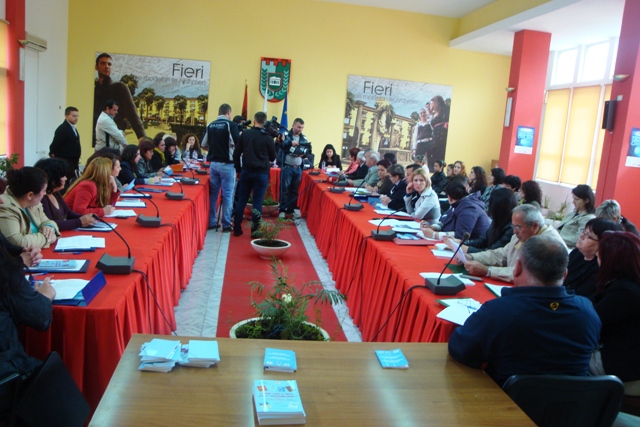
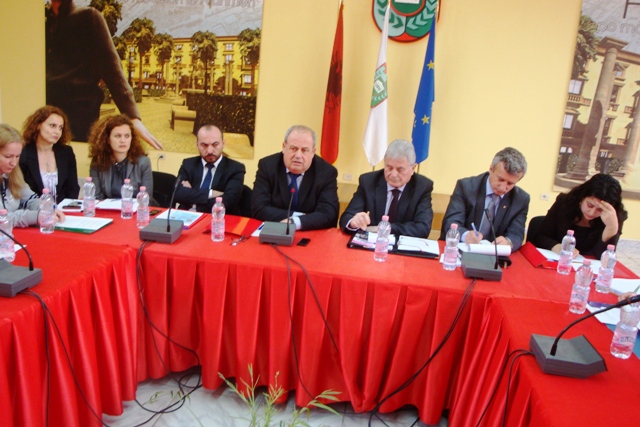
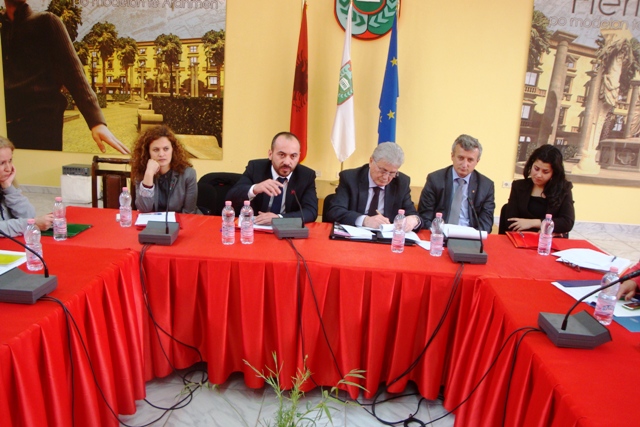
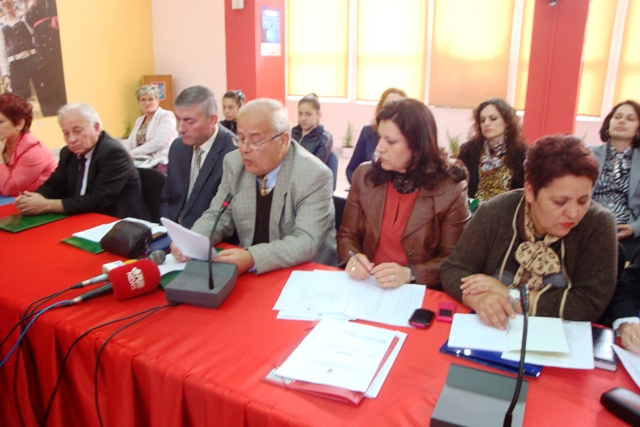
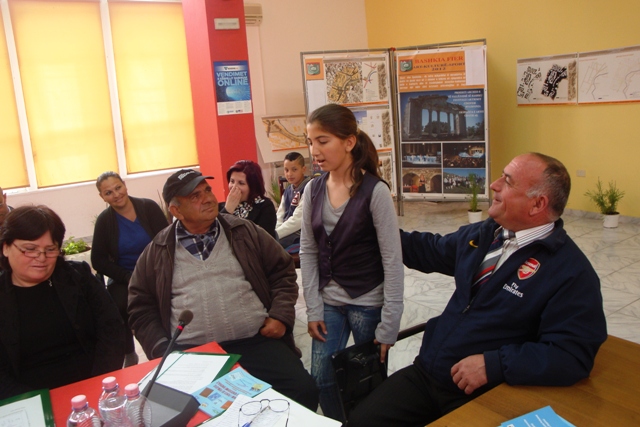
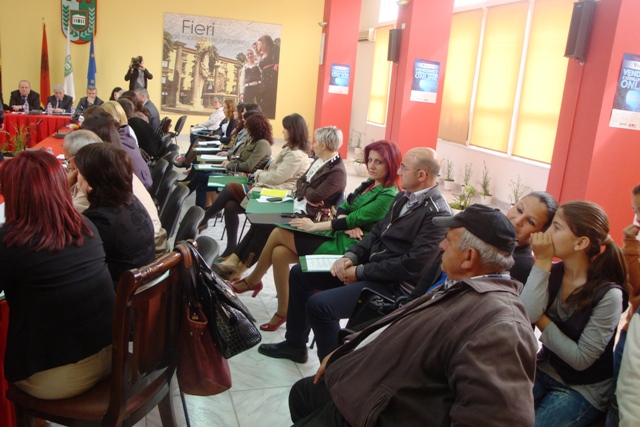
Conclusive Round Table organised in Fier It was an important activity, organised in Fieri Municipality meting room, on the 4th of April 2014, with participation of over 55 teachers, pupils and parents, Monitoring Groups members, from Levani and Zhupani schools, as well as representatives, (headmasters and FSASH/SPASH trade union local and school leaders), from other 5 schools, having more problems with school dropout and child labour and where we intend to extend our commitment on child labour prevention and elimination, also based on the experience gained during this Project implementation in Levani and Zhupani schools.
Both chairmen of FSASH and SPASH, Xhafer Dobrushi and Nevrus Kaptelli, the Mayor of Fieri City, Baftjar Zeqo, the Adviser to the Minister of Education and Sports, Edvin Kukunja, the Director of Social Services in The Ministry of Welfare and Youth, Miranda Pashaj, the representative of Fieri Prefecture, Gilda Tangu, the representative of Fieri Regional Education Directorate, Mihal Krimce, heads of FSASH and SPASH Fieri district sections, took also part in the Round Table. Chairman of FSASH, Xhafer Dobrushi, and trainings specialist in Fieri Regional Educational Directorate, Mihal Krimce, held presentations on FSASH and SPASH commitment to keep pupils in school and eliminate child labour, as well as special contribution of Fieri Regional Educational Directorate, in close collaboration with education trade unions FSASH and SPASH and their sections in Fieri district, to keep pupils in school and eliminate child labour, also based on Levani and Zhupani schools experience.
In his presentation, Project Coordinator, Stavri Liko, spoke about the Project, being focused on EI and IPEC commitment to eliminate child labour, their financial contribution for realisation of this Project, lessons learned and some conclusions on Project implementation in Levani and Zhupani schools, not only for these schools, but also for other schools in Fieri district and wider, in national level. Heads of Monitoring Groups, Arqile Bitri and Valbona Ymeraj, as well as headmasters of both schools, Gazmira Bircaj and Festim Meta, held detailed reports on activities organised, work done and results achieved in the framework of Project implementation, lessons learned and experience gained for their continuous commitment to keep all pupils in school and child labour prevention and elimination.
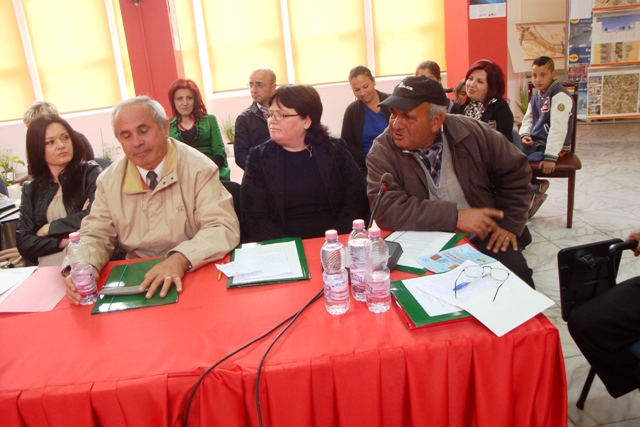
Teachers, pupils and parents, participating in Round Table, spoke about their personal experience during Project implementation, problems they face and the need of better collaboration with other stakeholders to keep all pupils in school and eliminate child labour. Realisation of Project objectives and results achieved in the framework of this Project implementation were subject of concrete discussions in this Round Table, being also focused on the continuous work to be done with those 15 pupils still dropped out from both schools and working, as well as with those 18 pupils still at risk to drop our from both schools. Representatives from other schools, (Roskoveci, Mbrostar, Hamil, Clirimi, Kallm), appreciated the work done in Levani and Zhupani schools and expressed their commitment to profit by their experience and organise better the individual concrete work with pupils dropped out or at risk to drop out from school and working.
Fieri City Mayor, Baftjar Zeqo, representatives from Ministry of Education and Sports, Edvin Kukunja, and Ministry of Welfare and Youth, Miranda Pashaj, spoke on behalf of their respective institutions, expressing their appreciations for the work that FSASH and SPASH are doing in child labour prevention and elimination and expressed their respective institutions’ commitment to support this work and to collaborate closely with FSASH and SPASH.
Some conclusions and a concrete program, mainly for this school year and beyond were approved in the Round table. Local and central TV channels, present in the Round Table, forecast news on the event, Project activities and results, also mentioning the contribution from EI-ILO_IPEC for its implementation.
EI-ILO_IPEC Project implemented in Fieri schools The implementation of Project “Teachers mobilisation and organising concrete I. ACTIVITIES ORGANISED 1. Preparative meetings Preparative meetings were organised in both schools, on the 18th of September 2013, with participation of Working Groups members, pupils, parents, representatives from Fieri Regional Educational Directorate, Roma association etc. School materials were also distributed for 80 pupils from both schools, thanks to financial support from this EI-ILO_IPEC Project. Special ceremonies were organised in both schools for distribution of these school materials, during these meetings, in the presence of all participants, including FSASH/SPASH representatives. 2. Monitoring Groups members meetings Four Monitoring Groups, composed of 5 members each, (3 teachers, 1 pupil, 1 parent), were set up in each school. Wide discussions were made at the first Monitoring Groups meetings, organised on the 18th of September 2013, about the situation of each pupils subject of Project implementation, organising everything regarding these Groups functioning and concrete work to be organised in the framework of Project implementation. Second Monitoring Groups’ members meetings were organised in both Levani and
Third Monitoring Groups’ members meetings were organised in both Levani and Zhupani schools, on 14 November 2013. As in previous meetings, teachers, pupils and parents, members of Monitoring Groups’ as well as the chairmen of FSASH, Xhafer Dobrushi, and SPASH, Nevrus Kaptelli, and headmasters of both schools, took part in both meetings. Fourth Monitoring Groups meetings were organised in Levani school, on 31 January and in Zhupani school, on 6 February 2014. Teachers, pupils and parents, members of Monitoring Groups, schools headmasters, Gazmira Bircaj and Festim Meta, as well as the Chairman of SPASH, Nevrus Kaptelli, took part in both meetings. Head of Monitoring Groups in Levani school, Arqile Bitri, and in Zhupani school, Valbona Ymeraj, held reports on the work done and results achieved in their respective schools, during the period December 2013 - January 2014. During discussions in both schools was made evident that, despite the short time from the previous reporting period and difficulties related to the winter time, other 3 pupils were withdrawn from working and turned back in Levani school and another one was withdrawn from working and returned in Zhupani school. So, out of 22 pupils dropped out in Levani school, 9 of them were turned back in total, while out of 16 pupils dropped out in Zhupani school, 8 of them were turned back. Fifth Monitoring Groups meetings were organised on 14 March 2014, in the framework of two days activities, where was discussed widely especially regarding the special engagement during the remained time, in order to realise Project objectives regarding pupils withdrawn from working and turned back in school and those rescued from dropping out from school, as well as the measures to be taken for the Conclusive Round Table to be organised by the beginning of April 2014. Sixth Monitoring Groups meetings were organised jointly with participation of Monitoring Groups members from both schools, on the 1st of April 2014. They were conclusive meetings, where was discussed widely about the final results, continuation of concrete individual work with pupils subject of Project implementation, as well as preparative measures regarding the organisation of Round Table, including participation scheme, program, venue, speakers, invited persons, action program and so on. 3. Meetings with parents Two important meetings were organised with parents on 13 December 2013, in the framework of EI-ILO_IPEC Project implementation in Levani and Zhupani schools. In Levai school, Head of Monitoring Groups, Arqile Bitri, informed participants on the work done, results achieved and problems faced during this period of Project implementation.
Almost the same procedures were followed in Zhupani school. In the presence of almost the same stakeholders from the school and the area where this school is situated, the Head of Monitoring Groups, Valbona Ymeraj, informed participants about work done, results achieved and problems faced. Role of parents in bringing their children to school was on the focus of this meeting. School Headmaster, Festim Meta, as well as teachers Laureta Lilo, Gurie Shehaj Arta Aliaj, Brunilda Mullaj etc, spoke about their experiences with parents of pupils dropped out or at risk to drop out, giving positive examples, but also negative ones. Speaking in both meetings, Chairman of FSASH, Xhafer Dobrushi, asked from parents not to overload their children with their problems and their troubles, because this has a direct negative impact in their childhood development. Project Coordinator, Stavri Liko, spoke in both meetings, about next activities to be organised in the framework of Project implementation, mentioning also artistic, cultural and sportive activities, as well as the Workshop to be organised in March 2014.
4. Workshop organised with participants from both schools A two days Workshop, as well as various cultural and sportive activities were organised in both Levani and Zhupani schools, on 13 and 14 March 2014. Chairmen of FSASH, Xhafer Dobrushi, and SPASH, Nevrus Kaptelli, as well as headmasters from both schools, Gazmira Bircaj, (Levani), and Festim Meta, (Zhupani), and the representative from Fieri Regional Educational Directorate, also attended the Workshop and cultural and sportive activities. A detailed Workshop program, last edition of the Magazine “Tribuna Sindikale”, the Brochure “Elimination of Child Labour, an Important Trade Union Issue”, published in the framework of AOb Project implementation, a special Brochure on Collective Agreement, as well as other publications like SCREAM Modules, Manual on Non Formal education etc, where some of the materials of Workshop file provided for each participant. The Workshop was organised in three different sessions. During First Session, Chairman of FSASH, Xhafer Dobrushi, was focused on theoretical training and explanations on: Discussions from participants followed these explanations, also making some proposals, on Albanian legislation and especially regarding the implementation of existing legislation. During the Second Session, training specialist from Fieri Regional Educational Directorate, Mihal Krimce, made special presentations on:
Media”: the most important Modules, how can teachers / trade union members raise awareness of children against child labour and how teachers can use SCREAM in their daily work
approach, learning styles, learner attributes and the related teaching approaches. Explanations were accompanied with concrete exercises regarding SCREAM different modules with interactive participation of teachers and pupils present in the Workshop. During the third Session, Project Coordinator, Stavri Liko, made a wide presentation on the Brochure “Elimination of Child Labour, an Important Trade Union Issue”, published in the framework of AOb Projects implementation, being focused especially on Guidelines about trade unions and teachers engagement in child labour prevention and elimination and lessons learned from FSASH/SPASH commitment to prevent and eliminate child labour, especially in Fieri schools. After that, discussions in the Workshop were focused on concrete situation of Project implementation, work done, results achieved, working methods used, conclusions and duties for the future and so on. Teachers Marsela Hebeja, Enkeled Resuli, Lirime Mataj, Margarita Cobo, from Levani school and Laureta Lilo, Brunilda Mullaj, Gurie Shehaj, and Arta Aliaj, from Zhupani school, spoke on behalf of their respective Monitoring Groups, analysing one by one each pupils subject of Project implementation, mentioning individually pupils turned back in school, those who are out of risk to drop out from school and those who they are still working with to be returned to school. Concrete interventions made also parents, Fatjona Dule, Elton Dalipi, Ali Dule, as well as pupils, Santiago Selimaj, Renalda Shkrela, Sara Hoxhaj, who mentioned the work they have done and results they have achieved in returning pupils in school. Discussions in this session were really concrete, based on concrete experience they were gaining in the process of Project implementation, also mentioning the results achieved and expected project objectives realisation. Based on figures mentioned during these discussions, the actual situation regarding project objectives realisation was as follows: In Levani school 4 monitoring groups composed of 24 teachers, pupils and parents had mobilised almost all teachers of the school and many pupils and parents, working individually with more than 70 pupils dropped out or at risk to drop out from school. As a result of this work, out of 22 pupils dropped out from school, 12 of them were withdrawn from working and turned back in school and other 2 had made progress and were expected to be returned, meanwhile out of 48 pupils at risk to drop out from school, 29 of them were attending the school regularly and other 4 had made progress in attending the school. In Zhupani school 4 monitoring groups composed of 22 teachers, pupils and parents have mobilised almost all teachers of the school and many pupils and parents, working with more than 52 pupils dropped out or at risk to drop out from school. As a result of this work, out of 16 pupils dropped out from school were withdrawn from working and turned back in school 9 of them, while out of 36 pupils at risk to drop out, 24 of them were attending the school regularly, being considered out of risk to drop out from school. An Action Plan was discussed and approved during this session, planning detailed elements of concrete and effective individual work with each of pupils still dropped out or at risk to drop out, aiming to bring them back in school as soon as possible. Headmasters of both schools, Gazmira Bircaj, (Levani school), and Festim Meta, (Zhupani school), as well as teachers, pupils and parents appreciated this support from EI-ILO_IPEC, mentioning the improvements done and results achieved in the framework of this Project implementation. 5. Cultural and sportive activities organised with participants from both schools Massive Cultural and sportive activities were also organised on 13 March 2014, with participation of more than 90 pupils from those dropped out or at risk to drop out and being integrated in school, as well as their classmates from both schools. All 24 teachers engaged in Project implementation and many other teachers, especially those from physical education and music, were the organisers of many sportive and cultural activities, including football, volleyball, athletic, painting, singing, dancing, recitations and so on. Activities were organised in form of competitions between schools and different classes. Special commissions followed by near results and identified the winners, who were announced and awarded at the end of activities, with participation of both FSASH and SPASH chairmen. It was really impressive when we saw active participation of some pupils, who had left the school and turned back after the work done in the framework of this Project. The organisation of these activities was a good example also for Fieri Regional Educational Directorate and other schools’ administrations of Fieri district and wider. Very important was the participation of local and national media representatives in both cultural and sportive activities, as well as during the Workshop. Local TV channels and the main national TV channel, Top Channel, broadcast news about activities and Workshop, mentioning also the engagement of both FSASH and SPASH and the contribution from EI-ILO_IPEC. Project Coordinator, Stavri Liko, also, through interviews for TV channels, spoke about the commitment of both education trade unions, also appreciating the support from EI-ILO_IPEC. 6. Conclusive Round Table organised with wide participation from Levani and Zhupani, as well as from some other schools It was an important activity, organised in Fieri Municipality meting room, with participation of over 55 teachers, pupils and parents, Monitoring Groups members, from Levani and Zhupani schools, as well as representatives, (headmasters and FSASH/SPASH trade union local and school leaders), from other 5 schools, having more problems with school dropout and child labour and where we intend to extend our commitment on child labour prevention and elimination, also based on the experience gained during this Project implementation in Levani and Zhupani schools.
Both chairmen of FSASH and SPASH, Xhafer Dobrushi and Nevrus Kaptelli, the Mayor of Fieri City, Baftjar Zeqo, the Adviser to the Minister of Education and Sports, Edvin Kukunja, the Director of Social Services in The Ministry of Welfare and Youth, Miranda Pashaj, the representative of Fieri Prefecture, Gilda Tangu, the representative of Fieri Regional Education Directorate, Mihal Krimce, heads of FSASH and SPASH Fieri district sections, took also part in the Round Table. Chairman of FSASH, Xhafer Dobrushi, and trainings specialist in Fieri Regional Educational Directorate, Mihal Krimce, held presentations on FSASH and SPASH commitment to keep pupils in school and eliminate child labour, as well as special contribution of Fieri Regional Educational Directorate, in close collaboration with education trade unions FSASH and SPASH and their sections in Fieri district, to keep pupils in school and eliminate child labour, also based on Levani and Zhupani schools experience. In his presentation, Project Coordinator, Stavri Liko, spoke about the Project, being focused on EI and IPEC commitment to eliminate child labour, their financial contribution for realisation of this Project, lessons learned and some conclusions on Project implementation in Levani and Zhupani schools, not only for these schools, but also for other schools in Fieri district and wider, in national level. Heads of Monitoring Groups, Arqile Bitri and Valbona Ymeraj, as well as headmasters of both schools, Gazmira Bircaj and Festim Meta, held detailed reports on activities organised, work done and results achieved in the framework of Project implementation, lessons learned and experience gained for their continuous commitment to keep all pupils in school and child labour prevention and elimination. Teachers, pupils and parents, participating in Round Table, spoke about their personal experience during Project implementation, problems they face and the need of better collaboration with other stakeholders to keep all pupils in school and eliminate child labour. Realisation of Project objectives and results achieved in the framework of this Project implementation were subject of concrete discussions in this Round Table, being also focused on the continuous work to be done with those 15 pupils still dropped out from both schools and working, as well as with those 18 pupils still at risk to drop our from both schools. Representatives from other schools, (Roskoveci, Mbrostar, Hamil, Clirimi, Kallm), appreciated the work done in Levani and Zhupani schools and expressed their commitment to profit by their experience and organise better the individual concrete work with pupils dropped out or at risk to drop out from school and working. Fieri City Mayor, Baftjar Zeqo, representatives from Ministry of Education and Sports, Edvin Kukunja, and Ministry of Welfare and Youth, Miranda Pashaj, spoke on behalf of their respective institutions, expressing their appreciations for the work that FSASH and SPASH are doing in child labour prevention and elimination and expressed their respective institutions’ commitment to support this work and to collaborate closely with FSASH and SPASH. Some conclusions and a concrete program, mainly for this school year and beyond were approved in the Round table. Local and central TV channels, present in the Round Table, forecast news on the event, Project activities and results, also mentioning the contribution from EI-ILO_IPEC for its implementation.
II. RESULTS OF PROJECT IMPLEMENTATION All of these activities have been linked directly to the Project objectives realisation. During Monitoring Groups’ meetings in progress, as well as during meetings with parents, workshop and Conclusive Round Table, there were analysed the results and detailed discussion were made, analysing almost all selected pupils one by one. In Levani school 4 monitoring groups composed of 24 teachers, pupils and parents have mobilised almost all teachers of the school and many pupils and parents, working individually with more than 70 pupils dropped out or at risk to drop out from school. As a result of this work, out of 22 pupils dropped out from school, 13 of them are withdrawn from working and turned back in school and other 2 have made progress and are expected to be returned, meanwhile out of 48 pupils at risk to drop out from school, 37 of them are attending the school regularly and other 3 have made some progress in attending the school. In Zhupani school 4 monitoring groups composed of 22 teachers, pupils and parents have mobilised almost all teachers of the school and many pupils and parents, working with more than 52 pupils dropped out or at risk to drop out from school. As a result of this work, out of 16 pupils dropped out from school, are turned back 10 of them, and have made progress other 2 pupils, while out of 36 pupils at risk to drop out, 29 of them are attending the school regularly, being considered out of risk to drop out from school, while other 2 have made some progress in attending the school. These results are considered as a good basis for the work to be done during this school year and beyond, based on the experience gained in the framework of this Project implementation. Teachers, pupils and parents, members of Monitoring Groups and those engaged directly in Project implementation promised that they will continue to work with the same commitment until the end of this school year and beyond for realisation of this Project objectives and elimination of child labour.
III. SOME CONCLUSIONS FROM THIS PROJECT IMPLEMENTATION Important conclusions are drawn on the work done and results achieved in the framework of this Project implementation, especially regarding approaches and working methods:
Results achieved and lessons learned will continue to be used during the actual school year and beyond working with those pupils remained problem and also others entering this category, because of economical and financial situation of their families and, in some cases, because of the mentality of their parents.
All teachers, pupils, parents and other stakeholders’ representatives, especially during the Workshop sessions, in last meetings of Monitoring Groups’ members, and in Conclusive Round Table have appreciated very much this support from EI-ILO_IPEC and have expressed their gratitude for this assistance. Both Presidencies of FSASH and SPASH, we also express their gratitude to EI-ILO_IPEC for this support, and ensure you that the experience gained and results achieved will be used effectively in our continues work to prevent and eliminate child labour in Albania.
|